Nearly 800,000 Exposed Telnet Servers: A Legacy Risk We Still Haven’t Killed
Nearly 800,000 Telnet servers are currently exposed to the internet, many running decade-old GNU InetUtils telnetd versions vulnerable to CVE-2026-24061 — a critical authentication bypass that allows attackers to log in as root with no password.

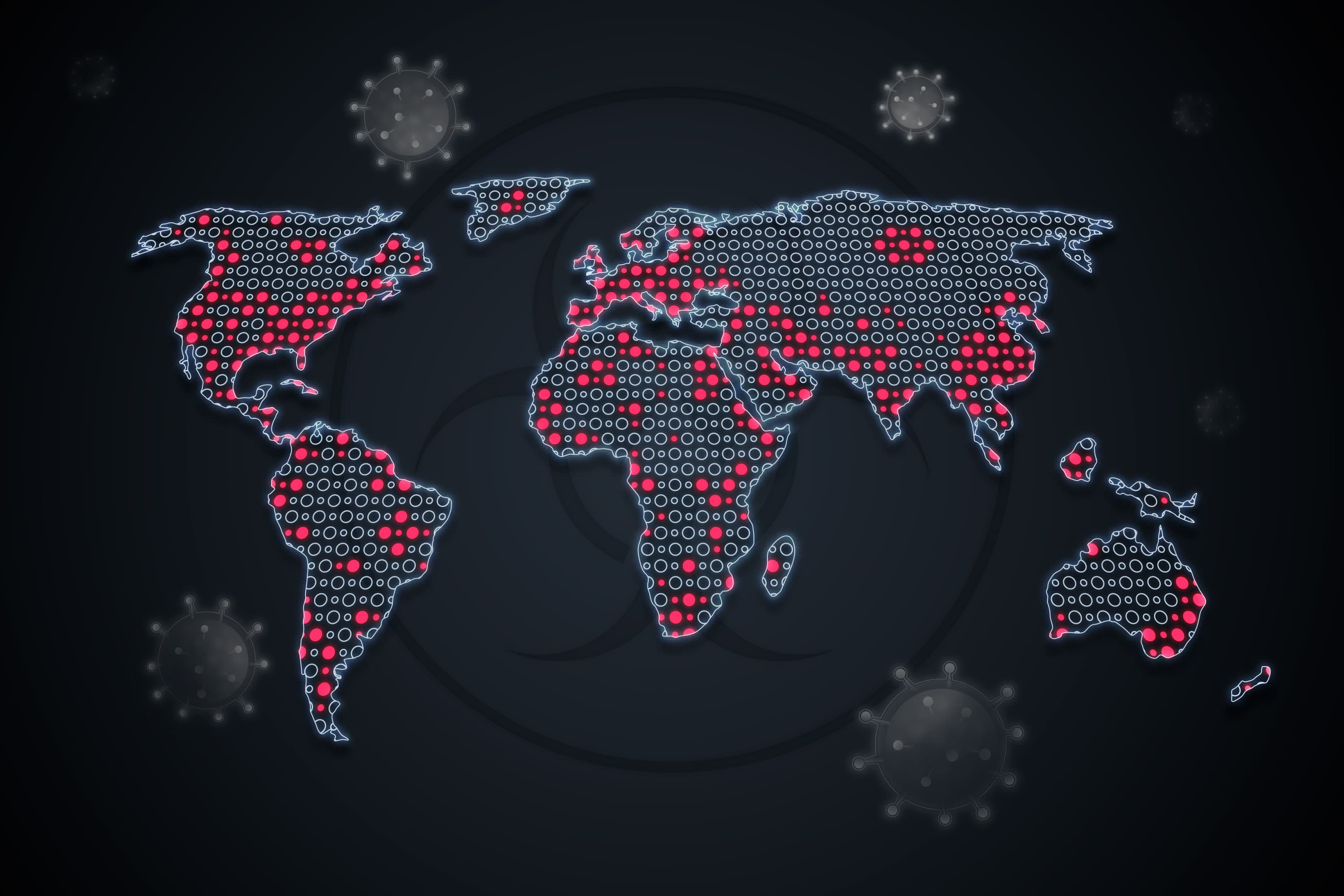
Nearly 800,000 Exposed Telnet Servers and CVE-2026-24061: Why Legacy Access Still Breaks Security (and How rConfig Helps)
In late January 2026, researchers reported a sharp reminder that legacy access paths are still one of the fastest ways into real environments: nearly 800,000 internet-exposed Telnet instances were observed globally while active exploitation was underway against a critical authentication bypass in GNU InetUtils telnetd (CVE-2026-24061).
Source reporting: BleepingComputer (Jan 26, 2026)
What’s happening right now
The Shadowserver Foundation reported it was tracking roughly 800,000 IP addresses exposing Telnet fingerprints, with large clusters across Asia, South America, and Europe. The uncomfortable part is not just the number, it’s what that number implies: Telnet is still being left reachable from the public internet, often on systems that don’t get updated for years (especially embedded and IoT). Read the coverage and Dark Reading’s OT/IoT angle.
In parallel, exploitation began almost immediately after the fix became available. GreyNoise observed activity beginning on January 21 (one day after the patch release), including attacks that targeted root in the majority of cases and showed both automation and occasional “human-at-keyboard” behavior. The takeaway is simple: once a trivial bypass is known, attackers do not wait around. (For related reporting on exploitation: BleepingComputer (Jan 23, 2026).)
What is CVE-2026-24061 (and why it’s so serious)
CVE-2026-24061 is a critical authentication bypass in the GNU InetUtils telnetd server, impacting versions 1.9.3 through 2.7 and patched in 2.8. In plain terms, it allows a remote client to manipulate login handling in a way that can result in a privileged session without normal authentication. Multiple sources have published technical analysis and attacker guidance, which is exactly why these issues spread quickly once public.
For deeper technical context and attacker tradecraft perspectives, see: runZero analysis, Horizon3 attack research, and SafeBreach root cause + PoC. The official NVD record is here: NVD: CVE-2026-24061.
Some defenders may also care about governance and compliance implications: the NVD entry notes it is in CISA’s Known Exploited Vulnerabilities catalog, which can drive internal patch SLAs and mandatory remediation timelines depending on your environment. See the KEV note on NVD.
Why Telnet keeps resurfacing in real environments
Telnet is not “new risk.” It is the opposite: it’s legacy risk that never fully died. Teams rarely set out to expose Telnet publicly. It usually happens through drift and entropy: a vendor appliance ships with it enabled, a temporary troubleshooting change never gets reverted, a firewall rule gets widened “for a day,” or an old device stays in production long after anyone remembers it exists.
InetUtils compounds this reality because it appears across Linux distributions and can sit quietly on old systems for a decade. That’s why this vulnerability maps so well to IoT and embedded devices. Shadowserver’s observation that Telnet often remains exposed on legacy IoT is not a surprise, it’s a pattern. Shadowserver exposure reporting.
If your organization has ever said “We think we removed Telnet years ago,” this is your reminder that “think” is not a control. What you need is the ability to continuously answer: Where is Telnet enabled, where is it reachable, and when did that change?
Immediate mitigation: patch, disable, block (and verify)
The most direct fixes are straightforward: upgrade to the patched release, disable telnetd if you do not need it, and block TCP/23 at every boundary that matters. If you cannot patch quickly due to legacy constraints, the safest option is often to remove exposure entirely while you plan remediation. Debian’s LTS announcement is a useful example of downstream guidance and practical context around Telnet risk: Debian LTS: inetutils security update.
The trap is stopping there. Patching and firewalling are necessary, but not sufficient, because drift reintroduces risk. A port gets reopened. A config rollback re-enables Telnet. A vendor update toggles services. Without verification and ongoing visibility, you’re relying on best intentions.
- Patch what you can: move to InetUtils 2.8+ wherever applicable.
- Disable telnetd wherever Telnet is not explicitly required.
- Block TCP/23 at firewalls and upstream controls, especially for legacy and IoT segments.
- Verify continuously so Telnet does not quietly return six months later.
Where rConfig fits: prevent “unknown Telnet” and stop configuration drift
This is exactly the class of problem rConfig is built to solve: proving the real, current state of your network by collecting device configurations, tracking changes, and continuously validating policy compliance over time. Security incidents like CVE-2026-24061 are rarely just “a patching issue.” They are often a visibility issue: systems running, services enabled, and access paths exposed outside the team’s awareness.
With rConfig in place, you can move from assumptions to evidence: you can identify where Telnet is enabled in device configs, track when it was introduced, detect reappearance, and prove remediation for audits. Even when you cannot patch (common in OT, embedded, and vendor-controlled estates), you can still reduce risk by enforcing compensating controls and monitoring drift.
In practice, that means rConfig helps teams: find Telnet usage, spot insecure management settings, track who changed what, and alert when banned services appear. It is the operational layer that makes “disable Telnet” measurable and repeatable, instead of a one-off project that slowly decays.
rConfig promotion: turn this incident into a permanent control
If nearly 800,000 Telnet servers can still be exposed in 2026, the safest assumption is that most environments have at least a little legacy hiding somewhere. The question is not “Is Telnet bad?” Everyone knows that. The question is: can you prove it is not enabled, not exposed, and not coming back?
rConfig helps network and security teams do exactly that by continuously collecting configurations, recording change history, and enforcing policy compliance. If you want to reduce the risk from Telnet, legacy services, and configuration drift, start with visibility you can trust.
Learn more about rConfig here: https://www.rconfig.com/
Want a quick walkthrough focused on legacy management hardening (Telnet, SSH settings, SNMP versions, ACL drift, and “who changed what”)? Book a demo: https://www.rconfig.com/demo/
Final thought
CVE-2026-24061 is not just a Telnet story. It’s a story about how legacy services and long-lived devices quietly persist, and how quickly attackers move once a trivial bypass exists. Patch, disable, and block. Then do the part most teams skip: continuously verify and detect drift. That is how you stop “we fixed it” turning into “it came back.”
Primary references used in this post: BleepingComputer (Jan 26, 2026), BleepingComputer (Jan 23, 2026), NVD, Debian LTS advisory, runZero, Horizon3, SafeBreach, Dark Reading.
About the Author
rConfig
All at rConfig
The rConfig Team is a collective of network engineers and automation experts. We build tools that manage millions of devices worldwide, focusing on speed, compliance, and reliability.
More about rConfig TeamRead Next

Why Running Oxidized or RANCID in Production Is No Longer Defensible

When the Cloud Bites Back: Why On-Prem Network Configuration Backup and Control Matter More Than Ever