Vendor Agnostic Network Management: Why Enterprises Are Moving Away from Single Vendor Tooling
The term "vendor-agnostic" is often used interchangeably with "multi-vendor," but they represent two very different concepts. Understanding the distinction is fundamental. A multi-vendor network is the common state of most enterprises, it is the problem of hardware diversity. A vendor-agnostic strategy, on the other hand, is the deliberate solution to that problem.


The Strategic Shift to Network Independence
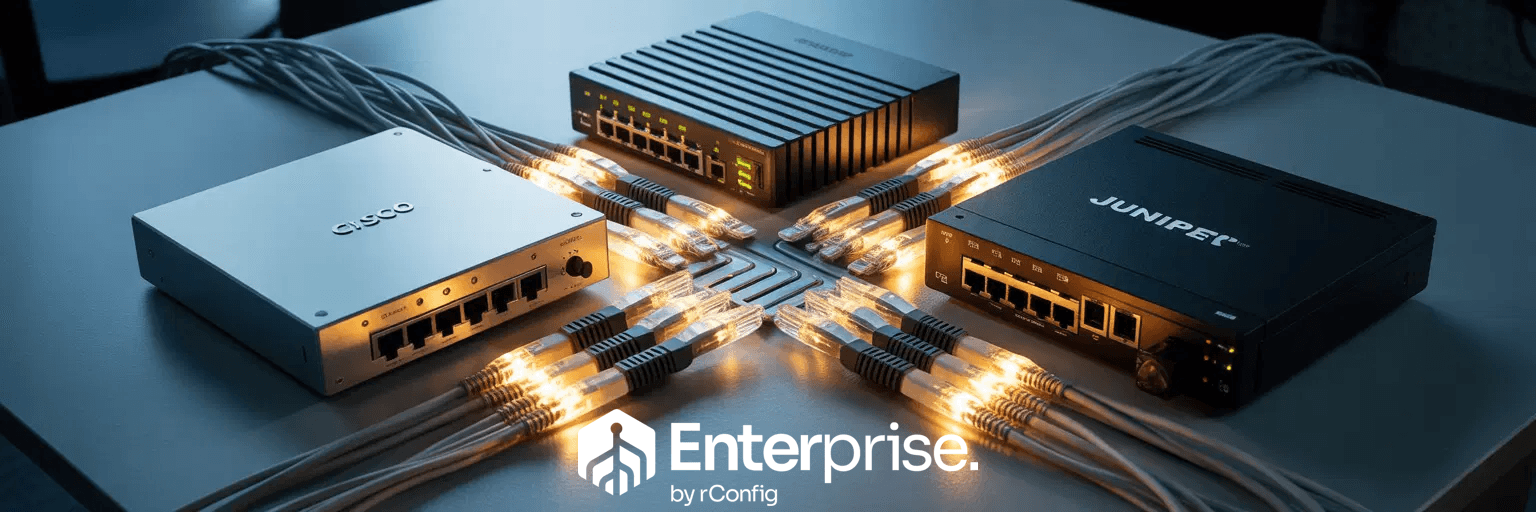
Most enterprise networks were not designed, they were accumulated. Mergers and acquisitions are a primary driver, bolting together disparate infrastructures overnight. One day your team manages a standardized Cisco environment, the next they inherit a mix of Juniper routers, Arista switches, and Palo Alto Networks firewalls. This is the practical reality of corporate growth. The idea of a pristine, single-vendor network is largely a relic of a simpler time.
Today's infrastructure is a complex ecosystem. Teams select hardware based on performance, security features, or cost effectiveness for a specific function, creating a "best-of-breed" environment. While this approach delivers specialized capabilities, it also introduces significant management fragmentation. The traditional single-vendor management platform, designed to oversee its own product family, becomes a silo. It cannot see, manage, or secure the other 40% of your network infrastructure. This is not just an inconvenience, it is a direct inhibitor of business agility.
In a hybrid, multi-cloud world, the ability to adapt is paramount. Being tethered to a single vendor's roadmap and pricing structure creates friction at every turn. Consequently, the move to vendor agnostic network management is no longer a niche technical preference. It has become a strategic business decision, essential for maintaining operational control, managing costs, and building a resilient infrastructure. This article analyzes the drivers behind this critical shift, the tangible risks of vendor lock-in, and the clear advantages of adopting a vendor neutral NCM platform.
Understanding Vendor Agnostic Operations

The term "vendor-agnostic" is often used interchangeably with "multi-vendor," but they represent two very different concepts. Understanding the distinction is fundamental. A multi-vendor network is the common state of most enterprises, it is the problem of hardware diversity. A vendor-agnostic strategy, on the other hand, is the deliberate solution to that problem.
At its core, vendor agnostic network management is a philosophy where a central platform communicates with any network device using standardized, open protocols like SSH, Telnet, SNMP, or NETCONF. It abstracts away the proprietary command-line interfaces (CLIs) and APIs of individual manufacturers. This approach effectively decouples the management software from the physical hardware. Think of it like a universal remote for your home entertainment system. You have a Sony television, a Bose soundbar, and an Apple TV. Instead of juggling three different remotes, a universal remote speaks a common language (infrared signals) to control them all from a single interface. A vendor-agnostic platform does the same for your network hardware.
This separation gives engineering teams the freedom to select the best tool for the job without being constrained by the limitations of their existing management software. If a new firewall from a different vendor offers superior threat protection or better performance, it can be integrated seamlessly. The management platform already knows how to communicate with it. This is the essence of interoperability. It establishes a unified management layer that sits above the physical infrastructure, providing a consistent method for configuration, monitoring, and automation across the entire estate. This is how organizations effectively implement solutions for multi vendor network management, turning a chaotic collection of devices into a cohesive, manageable system.
The Hidden Costs and Risks of Vendor Lock-In
Staying with a single vendor might seem like the path of least resistance, but it creates deep-seated dependencies that introduce significant costs and operational risks. These issues often extend far beyond the initial hardware purchase price, impacting budgets and strategic initiatives for years. The practice of avoiding vendor lock-in is not about being anti-vendor, it is about preserving strategic choice and financial leverage.
The consequences of being tied to a single ecosystem are tangible:
- Financial Penalties: When a vendor knows you have no viable alternative, they hold all the negotiating power. This manifests as inflated pricing on hardware renewals, mandatory high-margin support contracts, and expensive licensing for essential features. You are no longer paying market rate, you are paying a premium for your dependency.
- Operational Constraints: Your business strategy is forced to align with the vendor's product roadmap, not the other way around. If your organization needs to pivot to a new cloud provider or adopt a specific automation technology, but your incumbent vendor is slow to offer support, your initiatives are stalled. Innovation becomes dictated by their development cycle, not your business needs.
- Integration Hurdles: Proprietary systems create brittle and expensive integration projects. During a merger, combining two networks managed by different single-vendor platforms requires complex, custom-scripted workarounds. Adopting new security tools or monitoring platforms becomes a major project, as each must be custom-fit to the vendor's closed API ecosystem.
- The Skills Trap: Your engineering team becomes hyper-specialized in one vendor's ecosystem. This makes recruitment challenging and expensive, as the available talent pool is smaller. Furthermore, these specialized skills are not easily transferable, making it difficult for your team to adapt to new technologies and for you to retain talent seeking broader experience. Exploring a wider range of our available products can help teams build more versatile skill sets.
These risks are not just theoretical. They represent real financial and operational drains on the business, as illustrated below.
| Cost Category | Single-Vendor Reality (The Cost) | Vendor-Agnostic Alternative (The Savings) |
|---|---|---|
| Hardware Procurement | Non-competitive, inflated renewal pricing. | Competitive bidding drives down hardware costs. |
| Support Contracts | Mandatory, high-margin support packages. | Flexibility to choose third-party or consolidated support. |
| Integration Projects | Expensive, custom workarounds for proprietary APIs. | Standardized protocols reduce integration time and cost. |
| Staffing & Training | High cost to find and retain specialized experts; skills are not portable. | Broader talent pool available; skills are transferable across hardware. |
Note: This table illustrates how vendor lock-in creates costs that extend beyond initial purchase prices, impacting operational budgets and strategic flexibility over the long term.
Core Benefits of a Vendor Neutral NCM Platform

Adopting a vendor neutral NCM platform is the practical response to the risks of lock-in. It shifts the balance of power back to the enterprise, delivering strategic gains that directly address the financial and operational constraints imposed by a single-vendor approach. These benefits are not just incremental improvements, they represent a fundamental enhancement of how the network is managed, secured, and scaled.
- Enhanced Operational Flexibility: The most immediate benefit is freedom of choice. Engineers can deploy the best hardware for any given task based on performance, features, or cost, without worrying about management compatibility. This enables true infrastructure portability. If a branch office needs a low-cost SD-WAN solution from one vendor while the data center requires high-performance switches from another, both can be managed from the same interface. The network architecture can evolve based on business requirements, not vendor limitations.
- Direct Cost Reduction: A vendor-agnostic strategy introduces competition into the procurement process. When hardware vendors know they must compete on price and features, costs naturally decrease. Beyond hardware, consolidating multiple management tools into a single platform reduces software licensing fees, annual maintenance contracts, and the overhead associated with training staff on multiple systems. The total cost of ownership for network operations is significantly lowered.
- Increased Network Resilience and Security: A unified platform is a powerful tool for improving security posture. It allows for the consistent application of security policies, compliance checks, and backup schedules across every device, regardless of manufacturer. In a multi-tool environment, it is easy for gaps to emerge, a firewall from one vendor might not have the same password complexity policy as a switch from another. A vendor neutral NCM eliminates these inconsistencies, ensuring that a critical security patch or a new access control list is deployed uniformly, closing dangerous vulnerabilities.
- Future-Proofing the Network: Technology does not stand still. The rise of IoT, edge computing, and 5G will introduce a new wave of network-connected devices from a diverse range of manufacturers. A vendor agnostic network management architecture is inherently adaptable. It is designed to onboard new device types and vendors without requiring a disruptive and expensive platform migration. This builds a resilient and scalable foundation that can accommodate future technological shifts, ensuring the network remains a strategic asset rather than a legacy liability.
Implementing a Unified Configuration Strategy
Transitioning from a fragmented management approach to a unified one requires a central tool capable of executing a vendor-agnostic strategy. This is the role of a modern Network Configuration Manager (NCM). Its primary function is to automate and standardize configuration tasks across the entire multi-vendor estate, transforming network management from a reactive, manual process into a proactive, automated discipline.
A powerful vendor neutral NCM should be built on an open architecture. This is critical because no two enterprise networks are the same. While supporting major vendors is essential, many environments contain legacy hardware or niche devices that are still business-critical. An open platform can easily extend support to these devices, ensuring total coverage of your infrastructure. This philosophy is central to how we designed our v8core platform, ensuring it can adapt to the unique realities of any network.
When implementing this strategy, look for a network configuration manager that provides key capabilities from a single interface. This includes automated configuration backups with version history, which is your safety net for rapid recovery. It must also offer robust compliance reporting to audit device configurations against internal standards or regulatory requirements like CIS or NIST. Most importantly, it should enable engineers to build a configuration change once and deploy it to hundreds or thousands of devices from dozens of different vendors simultaneously. This capability alone dramatically reduces manual effort and eliminates the risk of human error.
Ultimately, adopting a vendor-agnostic NCM is about regaining control. It allows you to build and manage a network that serves specific business needs, not a vendor's sales targets. It turns the network into a flexible, secure, and cost-effective asset that can adapt and grow with the organization.
Your Network, Your Rules
The era of the single-vendor network is over, not by choice, but by the practical demands of business growth, technological innovation, and financial prudence. The modern enterprise network is a diverse, best-of-breed ecosystem. Attempting to manage it with siloed, vendor-specific tools is inefficient, costly, and insecure.
Vendor lock-in is not a simple inconvenience, it is a strategic risk that inflates costs, stifles innovation, and reduces operational agility. The antidote is a deliberate shift to a vendor agnostic network management strategy. By leveraging a vendor neutral NCM, organizations can break free from these constraints. They gain the flexibility to choose the best technology, the power to enforce consistent security policies, and the ability to build a network that is resilient, adaptable, and aligned with business objectives. This is not just about managing devices, it is about architecting a future-proof infrastructure on your own terms.
Take Control with rConfig
rConfig is built on a foundation of vendor neutrality. Our open architecture ensures you can manage your entire network infrastructure, not just the equipment from a handful of major manufacturers. The rConfig platform delivers the essential capabilities for modern network automation, including configuration management, compliance reporting, and bulk updates across your whole multi-vendor environment. Ready to break free from vendor lock-in and unify your network operations? Request a demo to see how rConfig can put you back in control.
About the Author
rConfig
All at rConfig
The rConfig Team is a collective of network engineers and automation experts. We build tools that manage millions of devices worldwide, focusing on speed, compliance, and reliability.
More about rConfig TeamRead Next

Beyond Brand Loyalty: The Tactical Shift to Vendor Agnostic Network Solutions
Multi Vendor Network Configuration Management: Managing Cisco, Juniper, and Fortinet Together